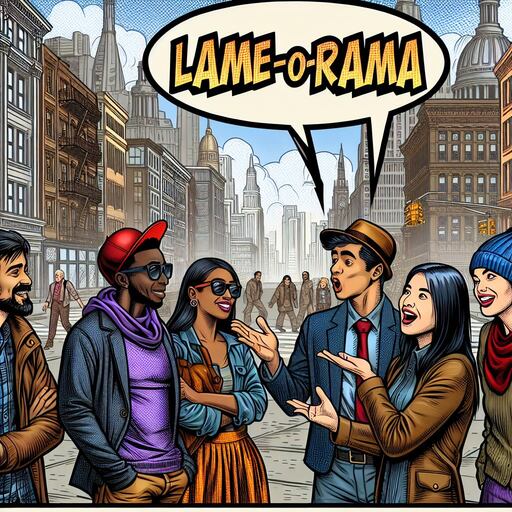
Lame-o-rama
Lame-o-rama means something is painfully dull, awkward, or a total snooze. It is a goofy, exaggerated put-down for a boring event, vibe, or person, and it usually reads as playful shade rather than a serious attack.
People use it when they want to clown a dead party, a flat convo, or any situation that feels like it has zero spark. The term sounds a little retro and cartoonish, which is part of the joke: it makes the boredom feel even more embarrassing.
Quick Stats
| Stat | Read |
|---|---|
| ⚡Aura Impact | +180 |
| 📈Usage Level | Low |
| 😬Cringe Risk | Medium |
The Feeling Behind Lame-o-rama
Lame-o-rama is basically boredom with extra flair. It does the job of saying something is lame, but it adds a goofy little performance so the insult lands with more attitude than seriousness.
The term has a mock-dramatic feel, like the speaker is exaggerating on purpose because the situation was so dull they had to make fun of it. That makes it better for teasing friends than for real criticism.
How People Actually Use It
You will mostly see lame-o-rama in texts, group chats, captions, or joke comments after a dry hangout or a boring stretch of time. It works best when the speaker wants to sound amused by the misery, not genuinely furious.
It can also be used for a person who is acting painfully uninteresting, but that usually comes off stronger than using it for an event. The phrase is old-school enough that younger users may say it ironically.
Examples You'd Actually See
That meeting was a lame-o-rama, I was fighting for my life.
No music, no snacks, just vibes? This party is lame-o-rama.
Bro turned the whole date into lame-o-rama with that interview talk.
Fits the Joke vs. Trying Too Hard
Sounds right: The whole bus ride was lame-o-rama after the Wi-Fi died.
Sounds forced: Your quarterly report is lame-o-rama, per my analysis.
Where Lame-o-rama Stands Now
Lame-o-rama is still understandable, but it feels more playful than current. Most people would recognize it as a joking insult, while regular everyday speakers are more likely to just say lame, boring, or dead.